
What Is Compassion & How Do You Develop It?
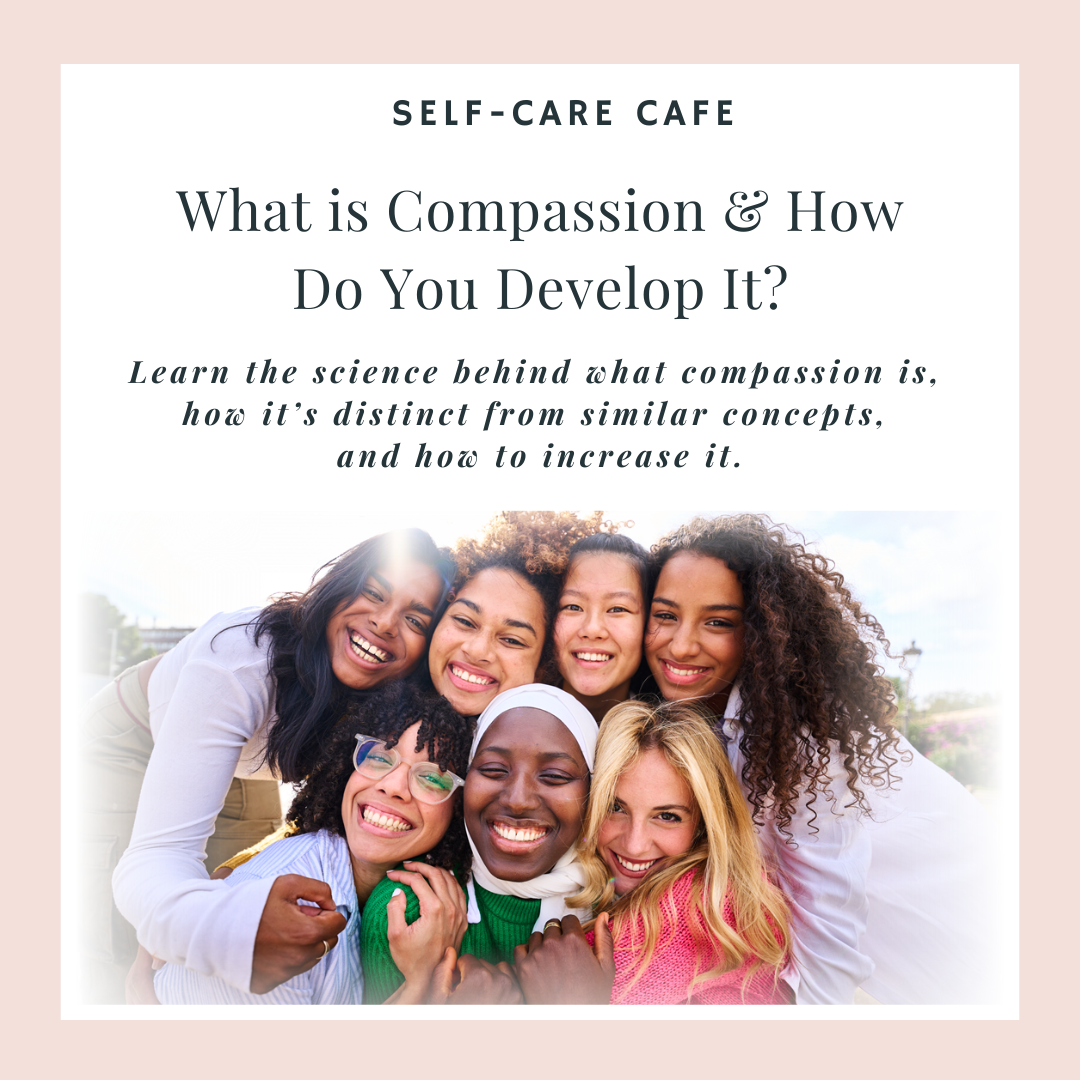
Compassion is a term you're probably already familiar with. But why are psychologists interested in compassion, and how does it connect to your well-being? In psychology, compassion is usually defined as “being moved by another's suffering and wanting to help”. The opposite of compassion might be “callousness” and “heartlessness.” These words imply at least indifference to, if not enjoyment of, someone else's suffering.
It is generally theorized that humans have evolved to experience compassion because the altruistic behavior the emotion triggers likely improved the survival of our ancestors. However, people may experience varying levels of compassion depending on context.
For example, research has found that individuals are more likely to feel compassion for those in their own social group. There may be an evolutionary basis for this, in which our ancestors were more likely to survive if they felt compassion for those within their social group rather than for those from competitor groups.
Compassion Versus Empathy
Are compassion and empathy the same? They may be confused because both involve relating to others' emotions. However, it can be useful to distinguish these concepts. For example, psychologists Singer and Klimecki clearly differentiate them: “In contrast to empathy, compassion does not mean sharing the suffering of the other: rather, it is characterized by feelings of warmth, concern, and care for the other, as well as a strong motivation to improve the other person’s well-being. Compassion is feeling for and not feeling with the other”.
An empathetic response might lead to wanting to distance oneself from the emotional situation, while a compassionate response involves a desire to help the other person—essentially, to get even closer to the emotional situation. This difference is supported by research: psychologist Eisenberg found that people who felt compassion were more likely to help than those experiencing empathic distress.
Can You Increase Compassion?
Research on compassion has increased over the last few decades, partly due to its perceived benefits for oneself and others. In fact, studies have shown various positive effects of experiencing compassion, such as decreased depression and anxiety. You might be wondering how to boost your compassion. A recent area of research explores contemplative practices, such as meditation, to foster benevolent feelings toward others. One example is loving-kindness meditation, in which a person is guided to wish well for others and notice the pleasant feelings that come with it. Long-term practice of this and similar meditations is linked to changes in the brain: experienced meditators trained in compassion tend to show a stronger neural response in a region associated with compassion than novice meditators (Lutz et al., 2008). Fortunately, you don’t need to meditate for thirty years to enjoy the benefits. Research suggests that even short-term practice can positively impact not only others but also the person practicing. There are many free guided loving-kindness meditations available online—consider trying one or two to see how they work for you.
What Is Compassion Fatigue?
So far, we have considered the benefits of experiencing compassion. However, some research has examined the disadvantages of compassion, such as compassion fatigue. Compassion fatigue is most often recognized and discussed in the context of helping professions such as medicine, nursing, social work, and clinical psychology. Figley refers to compassion fatigue as “a more user-friendly term for secondary traumatic stress disorder, which is nearly identical to PTSD, except that it applies to those emotionally affected by the trauma of another”.
The phenomenon stems from the intense emotional investment that many individuals, including doctors, nurses, social workers, and psychologists, may have in their clients’ or patients’ situations. Even if you are not working in one of these professional contexts, you might still experience compassion fatigue related to close friends or family members.
In Sum
Compassion is key to human experience, driving prosocial behavior and improving countless lives. While we have seen that the feeling of compassion can lead to negative outcomes, such as compassion fatigue, we have also seen that it generally has numerous benefits for both the person experiencing compassion and the person(s) for whom it is felt.
Author