The Art of Companioning Introduction
How to Use This Book
What Kind of Support Do You Actually Need Right Now?
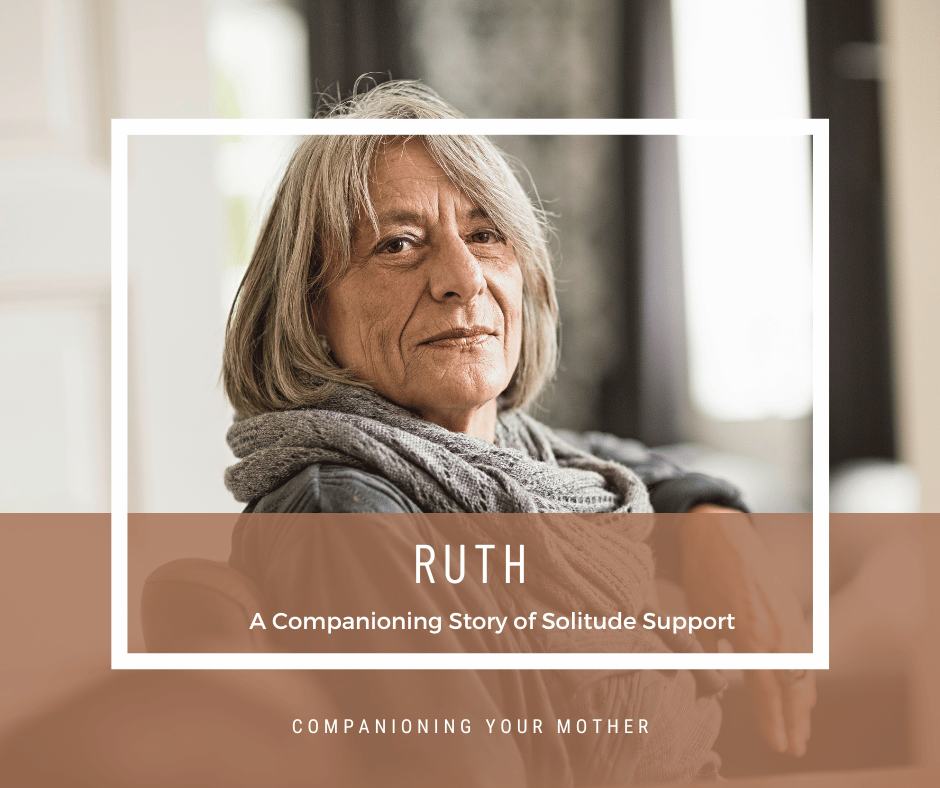
Ruth's Story
A Companioning Story of Solitude
Ruth's kitchen table was covered in foil-wrapped dishes she hadn't opened.
The answering machine blinked at nine messages; a number Mara was fairly sure had been six the day before.
The doorbell rang while Mara was still taking off her coat. Ruth's whole body braced before she'd even reached the door.
“I've got it,” Mara said.
It was a neighbor, casserole in hand, already talking before the door was fully open — how is she doing, really? We've just been so worried; tell her we're thinking of her every single day.
Mara thanked her, took the dish, and closed the door gently but completely.
Ruth was still standing in the hallway, arms crossed over herself.
“That's the fourth one today,” she said.
“I know,” Mara said.
“I keep opening the door and putting on the face,” Ruth said. “The grateful face. The doing-as-well-as-can-be-expected face.”
“You don't have to do that with me,” Mara said.
Ruth's face didn't change right away, like the muscles had forgotten another setting existed.
“What do you actually want right now?” Mara asked. “Not what would be gracious. What do you want?”
Ruth was quiet for a long moment.
“I want everyone to stop checking on me,” she said, and then looked immediately guilty for saying it. “That's terrible. They love him too. They're grieving too.”
“It's not terrible,” Mara said. “It's honest.”
“I just want to sit in this house without performing that I'm fine, or that I'm not fine, or anything at all,” Ruth said. “I want the phone to stop ringing. I want not to have to explain myself to one more casserole.”
Mara nodded slowly.
“Okay,” she said. “Then let's get you that.”
She unplugged the phone from the wall — the actual physical unplugging, not a suggestion of it — and set it on the counter.
“What are you doing?” Ruth asked, half-laughing, half-alarmed.
“Giving you a day where it doesn't ring,” Mara said. “I'll call the family tonight and tell them you're resting, and you'll reach out when you're ready. That's not a lie. It's just not today.”
She found a notecard in the kitchen drawer and wrote: “Ruth is resting. She'll be in touch. Thank you for your love — please hold it for a few days.” She taped it to the front door.
Ruth watched her do it without stopping her.
“You don't have to stay either,” Ruth said quietly, once the note was up. “I know that sounds strange to say to your own daughter. But I mean it. I don't want company today. I want to be by myself in my own house.”
Mara looked at her for a moment — really looking, checking for something underneath the words, and not finding it. Just tiredness. Just a woman who wanted her own kitchen back.
“Are you sure?” Mara asked, once, gently.
“I'm sure,” Ruth said. “I'll call you tonight. I promise. I just need today to be quiet.”
Mara nodded and picked her coat back up.
“I'm one phone call away,” she said. “Not because I don't trust you alone. Because I love you and it's true.”
Ruth almost smiled — the first almost-real thing on her face all week.
At the door, Mara paused.
“You don't owe anyone a version of grieving they can feel good about,” she said. “Not the neighbors. Not the casseroles. Not me.”
Ruth nodded, eyes wet but steady.
Mara left. The house, for the first time in ten days, went quiet behind her — not empty, not abandoned, just finally, mercifully, left alone.

Take a Moment
Pause.
Notice what it was like to watch Mara unplug the phone instead of staying to keep her mother company.
Let yourself arrive before continuing.
Journaling Your Inner Inquiry
Origin
Witnessing
The Companion's Support
Turning Inward
A Gentle Practice
The next time you're checking in on someone who's grieving or overwhelmed, ask directly: “Do you want company, or would it help more if I gave you the day?”
If they choose solitude, protect it — from yourself included.
A Quiet Reminder
Sometimes the most companioning thing you can do is leave, once you've made sure someone is safe to be truly alone.
The Art of Companioning Life's Transitions
To access another chapter, simply tap on the Chapter image below.











The Art of Companioning through Life's Transitions
Closing
"You Were Never Meant to Do This Alone"
If you have made your way here…
You have not simply read a book.
You have witnessed lives.
You have sat in rooms where something real was spoken.
You have felt moments that may have reminded you of your own.
Perhaps you saw yourself in one of the women.
Or in several.
Or in all of them.
Perhaps you recognized:
- A question you have been carrying
- A feeling you have not yet named
- A quiet knowing that has been waiting for your attention
Or perhaps ... you recognized something else.
A way of being.
Not in the stories alone…
But in how Mara stayed.
You may have noticed:
- How she did not rush
- How she did not fix
- How she did not take over what was not hers
And also:
- How she did not disappear
- How she did not withdraw
- How she did not distance herself from what was real
She remained.
Not perfectly.
But attentively.
And perhaps something in you recognized that this way of being ... is not something reserved for a role.
It is something that can be lived.
In conversations.
In relationships.
In the quiet moments when someone shares something true.
And also…in the way you sit with yourself.
Because at its heart, companioning is not only about how we are with others.
It is also about how we are with ourselves when:
- Something feels uncertain
- Something no longer fits
- Something is ending
- Something is beginning
You have seen what it looks like to:
- allow space instead of filling it
- ask instead of assuming
- notice instead of rushing past
You have seen that clarity does not always come immediately.
That truth often arrives quietly.
That something meaningful can unfold…when it is not forced.
And perhaps, most importantly:
You have seen that it is possible to be deeply present…without carrying
what is not yours.
This is not something to master.
It is something to practice.
Gently.
Imperfectly.
Over time.
There may be moments when you forget.
When you move too quickly.
When you try to fix what simply needs to be felt.
That is part of the process.
You can always return.
To your breath.
To your body.
To the question:
What is here… right now?
And if you choose to walk alongside others in this way …
You are not meant to do that alone either.
You may find support in:
- quiet reflection
- honest conversations
- trusted mentors or peers
- spaces where your own experience can be witnessed
Not because you are doing something wrong.
But because this kind of presence deserves to be held as well.
Just as you have seen Mara do.
There is no final answer waiting at the end of this book.
Only a deeper way of being.
One that you may already recognize.
One that may already be yours.
Before You Go
A Final Reminder
Take a breath.
You do not need the answers to sit with what is real.
Let yourself arrive here.
You do not have to fix to care deeply.
Notice what you are carrying.
You do not have to carry to be present.
Notice what you are ready to set down.
And you were never meant to walk
through life’s transitions…alone.
And notice …
What feels quietly true.