The Art of Companioning Introduction
How to Use This Book
The Art of Companioning through Life's Transitions
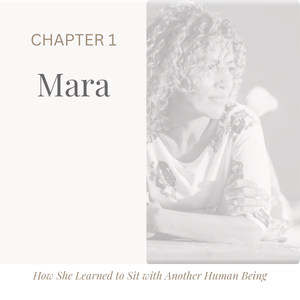
Chapter 1 - Mara
"How She Learned to Sit with Another Human Being"
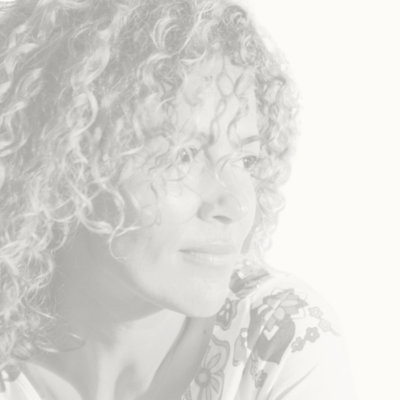
Mara did not always know how to sit with another person’s pain.
There was a time when she believed that helping meant guiding, offering insight, or gently leading someone toward a clearer path. She listened carefully. She asked thoughtful questions. She shared what she had learned. And often, people left those conversations feeling better—lighter, even.
But something in her remained unsettled.
It was not obvious at first. It appeared in small moments—after a conversation had ended, when she would sit quietly and replay what had been said. She began to notice how often she had moved just a little too quickly. How often she had leaned in to offer something—an idea, a reframe, a possibility—just as the other person was nearing the edge of something deeper.
She began to wonder:
What might have happened if she had waited?
This question stayed with her.
It followed her into conversations. It softened her responses. It slowed her down. And gradually, something began to change.
She started to listen differently.
Not just to the words being spoken, but to the pauses between them. To the shifts in tone. To the moments when someone hesitated, as though standing at the threshold of something they were not yet ready to name.
Instead of stepping in, she began to stay.
Instead of offering, she began to notice.
Instead of guiding, she began to trust.
At first, this felt unfamiliar. Even uncomfortable.
There were moments when silence stretched longer than she expected. Moments when she felt the impulse to fill the space, to help, to move things forward. Moments when she wondered if she was doing enough.
But she remained.
And in that remaining, something unexpected began to unfold.
People started to go deeper. Not because she led them there, but because she no longer interrupted the quiet movement of their own awareness. They spoke more slowly. They reflected more honestly. They began to hear themselves in new ways.
And Mara began to understand something she had not fully grasped before:
That presence is not passive.
It is an active, attentive, and deeply intentional way of being with another person. It requires restraint. It requires trust. It requires a willingness to release the need to be helpful in the ways we have been taught to define it.
Over time, Mara came to recognize that companioning is not about taking someone somewhere.
It is about meeting them where they are.
It is about creating a space where truth can emerge without pressure.
It is about honoring the pace of another person’s becoming.
This understanding did not arrive all at once.
It unfolded slowly, shaped by the people she sat with, the moments she almost interrupted, the times she did interrupt, and the many quiet returns to presence that followed.
Mara is still learning.
She still notices the impulse to step in too quickly.
She still feels the pull to make things clearer, easier, more resolved.
But now, she also knows how to pause.
She knows how to listen not only for what is being said, but for what is waiting beneath the surface. She knows how to stay with someone in the space where answers are not yet formed. And most importantly, she has come to trust that something meaningful happens there.
This is where her companioning begins.

Take Moment
Take a breath.
You've just witnessed how Mara began to understand the difference between helping ... and truly companioning.
You are invited to pause before continuing.
Journaling Your Inner Inquiry
Arriving
Witnessing
The Companion's Becoming
Turning Inward
A Gentle Practice
Before your next meaningful conversation…
Pause.
Notice your breath.
Notice your body.
Let yourself arrive.
A Quiet Reminder
You do not have to fix… to be deeply present.
The Art of Companioning Life's Transitions
To access another chapter, simply tap on the Chapter image below.







The Art of Companioning through Life's Transitions
Closing
"You Were Never Meant to Do This Alone"
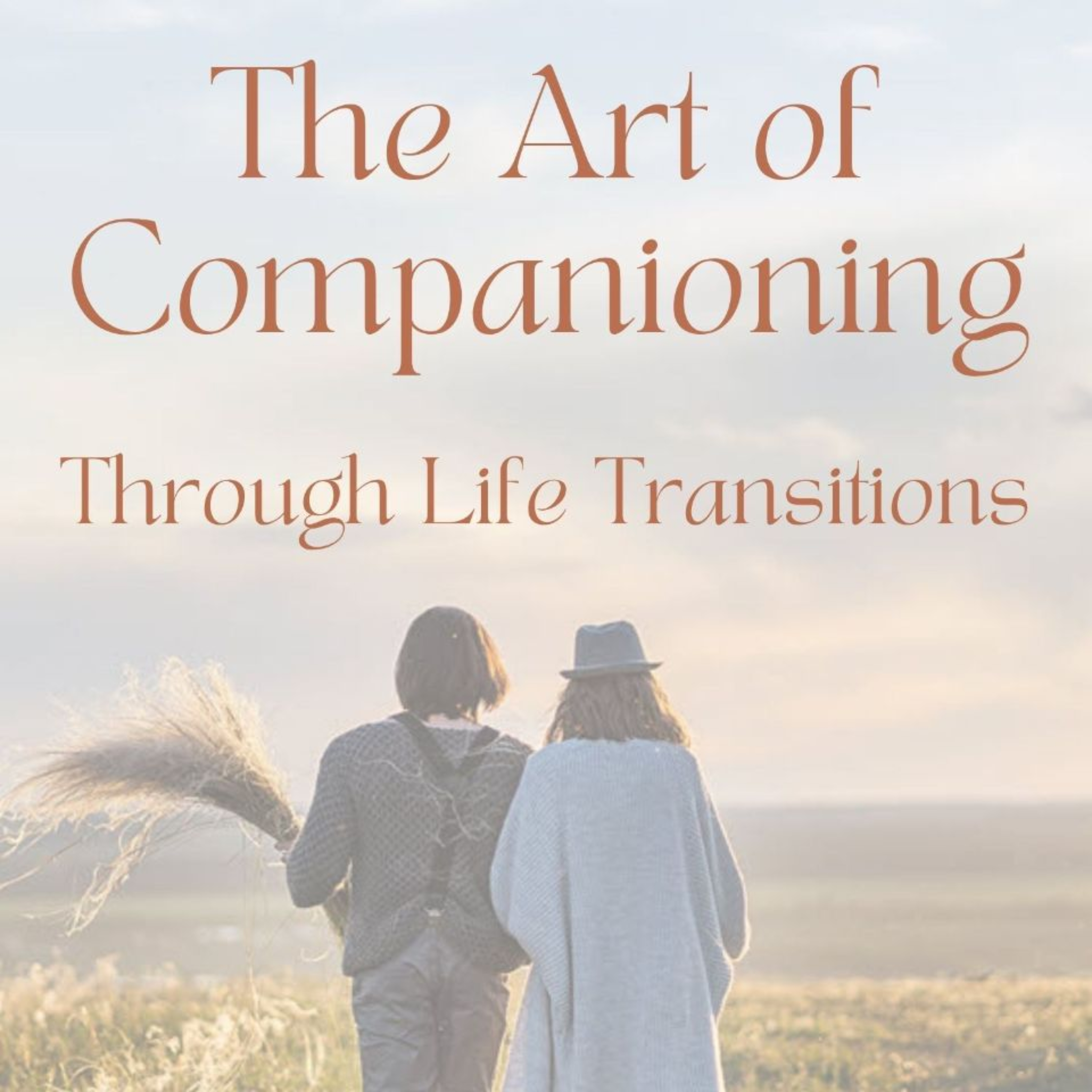
If you have made your way here…
You have not simply read a book.
You have witnessed lives.
You have sat in rooms where something real was spoken.
You have felt moments that may have reminded you of your own.
Perhaps you saw yourself in one of the women.
Or in several.
Or in all of them.
Perhaps you recognized:
- A question you have been carrying
- A feeling you have not yet named
- A quiet knowing that has been waiting for your attention
Or perhaps ... you recognized something else.
A way of being.
Not in the stories alone…
But in how Mara stayed.
You may have noticed:
- How she did not rush
- How she did not fix
- How she did not take over what was not hers
And also:
- How she did not disappear
- How she did not withdraw
- How she did not distance herself from what was real
She remained.
Not perfectly.
But attentively.
And perhaps something in you recognized that this way of being ... is not something reserved for a role.
It is something that can be lived.
In conversations.
In relationships.
In the quiet moments when someone shares something true.
And also…in the way you sit with yourself.
Because at its heart, companioning is not only about how we are with others.
It is also about how we are with ourselves when:
- Something feels uncertain
- Something no longer fits
- Something is ending
- Something is beginning
You have seen what it looks like to:
- allow space instead of filling it
- ask instead of assuming
- notice instead of rushing past
You have seen that clarity does not always come immediately.
That truth often arrives quietly.
That something meaningful can unfold…when it is not forced.
And perhaps, most importantly:
You have seen that it is possible to be deeply present…without carrying
what is not yours.
This is not something to master.
It is something to practice.
Gently.
Imperfectly.
Over time.
There may be moments when you forget.
When you move too quickly.
When you try to fix what simply needs to be felt.
That is part of the process.
You can always return.
To your breath.
To your body.
To the question:
What is here… right now?
And if you choose to walk alongside others in this way …
You are not meant to do that alone either.
You may find support in:
- quiet reflection
- honest conversations
- trusted mentors or peers
- spaces where your own experience can be witnessed
Not because you are doing something wrong.
But because this kind of presence deserves to be held as well.
Just as you have seen Mara do.
There is no final answer waiting at the end of this book.
Only a deeper way of being.
One that you may already recognize.
One that may already be yours.
Before You Go
A Final Reminder
Take a breath.
You do not need the answers to sit with what is real.
Let yourself arrive here.
You do not have to fix to care deeply.
Notice what you are carrying.
You do not have to carry to be present.
Notice what you are ready to set down.
And you were never meant to walk
through life’s transitions…alone.
And notice …
What feels quietly true.